How to Promote Learning During the School Holidays
Promote Learning – School holidays are often seen as a well-deserved break from the rigours of academic life—a time for students to relax, recharge, and have fun. But learning doesn’t have to (and shouldn’t) come to a complete halt during this time. In fact, holidays provide a valuable opportunity to nurture curiosity, deepen understanding, and develop new skills in ways that formal classrooms may not allow
Here’s how parents and educators can encourage meaningful learning throughout the school break—without turning it into summer school.
Promote Learning
- Make Learning a Natural Part of Daily Life
Children are constantly absorbing information, and daily experiences can be rich sources of education:
- Cooking together teaches maths (measurements, proportions), science (chemical reactions), and reading (following instructions).
- Shopping trips can involve budgeting exercises, price comparisons, and even discussions about supply chains or local economies.
- Gardening introduces biology, sustainability, and responsibility in a hands-on way.
- Traveling or day trips open doors to geography, culture, and history—whether it’s a visit to a museum or a walk in a nature reserve.
Tip: Encourage your child to ask questions and let them help plan these activities to foster ownership and curiosity.
- Turn Screen Time into Learning Time
While it’s easy for kids to fall into endless loops of gaming or YouTube, technology can also be a great educational ally:
- Educational apps and games like Duolingo, Prodigy, or Scratch make learning interactive and fun.
- Documentaries and science shows spark interest in topics ranging from space to marine life.
- Virtual tours of museums, zoos, and landmarks offer immersive learning experiences without leaving home.
Tip: Set balanced screen time rules that include both entertainment and educational content.
- Promote Reading for Pleasure
The holidays are the perfect time to instil a love of reading:
- Let children choose books based on their interests, not just school reading lists.
- Create a cosy reading corner at home.
- Join summer reading challenges at your local library or online.
Tip: Read together or create a family book club. Ask questions about the characters, setting, or plot to build comprehension skills.
- Encourage Creative Projects
Learning isn’t confined to textbooks. Creative activities develop problem-solving, critical thinking, and emotional expression:
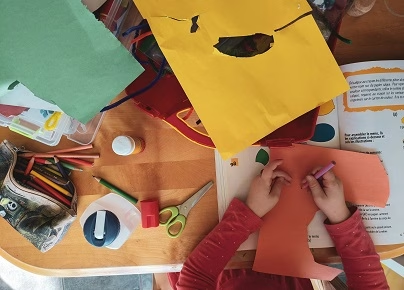
- Arts and crafts improve fine motor skills and imaginative thinking.
- Writing stories, journals, or comic strips build literacy and creativity.
- Building models or DIY projects combine engineering, design, and collaboration.
Tip: Provide a “maker space” at home with simple materials like cardboard, glue, paint, and recycled items.
- Sign Up for Camps and Clubs
Local or online holiday camps often offer fun, structured learning in areas like coding, robotics, drama, or sports:
- These environments encourage social interaction and peer learning.
- Children can explore interests that may not be available during the school year.
Tip: Look for organisations that blend play and education and involve your child in choosing the right programme for them.

- Set Personal Learning Goals
Children love a challenge—especially one they choose themselves. During the break, help them set small, achievable learning goals such as:
- Learning to bake three new recipes.
- Memorising a poem or song in another language.
- Completing a mini science project or research on a favourite topic.
Tip: Use a reward chart or journal to track progress and celebrate achievements.
- Stay Social, Stay Sharp
Learning doesn’t happen in isolation. Encourage social engagement through:
- Group projects with friends like putting on a play or creating a backyard obstacle course.
- Volunteering to develop empathy and civic responsibility.
- Pen pals or video calls with family members to improve communication skills.
Tip: Facilitate interactions that blend fun and conversation—essential skills for school and life.
Promoting learning during the school holidays doesn’t mean replicating the school day at home. It’s about sparking curiosity, building real-world skills, and encouraging a lifelong love of discovery. By weaving education into play, exploration, and family time, you’ll help children return to school more confident, enriched, and ready to learn.

Welcome to Under 5s—a dedicated resource for families navigating the beautiful, busy whirlwind of the early years. We concentrate on real, everyday advice that families in Yorkshire and beyond can easily follow.