
How to Talk to Young Children About Big Emotions
alk to Young Children About Big Emotions – Helping young children navigate big emotions can feel overwhelming – for them and for us. Yet, learning how to express and manage emotions is one of the most important skills children can develop. By opening up conversations about feelings in a calm and age-appropriate way, parents and carers can give children the tools they need to understand themselves and others.
Talk to Young Children About Big Emotions
Why Emotional Literacy Matters
This prep school in Surrey suggests that children experience emotions just as intensely as adults do – but without the vocabulary or experience to make sense of them. Emotional literacy is the ability to identify, understand and express emotions in a healthy way. Developing this early helps children form positive relationships, build resilience, and make sense of the world around them.
Use Simple Language
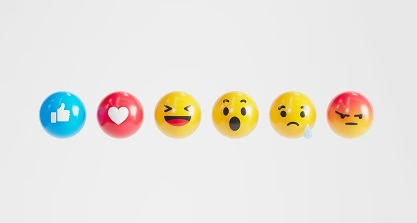
When talking to young children, it’s helpful to keep language clear and simple. Instead of using abstract terms like “anxious” or “frustrated” straight away, start with basic words like happy, sad, angry, or scared. You can build on this gradually as their understanding grows.
Using phrases like, “I can see you’re feeling really cross,” or “You look a bit sad right now – do you want to talk about it?” helps children connect their internal experience with language in a calm and non-judgemental way.
Name the Emotion
Labelling emotions helps children feel seen and heard. If a child is crying after dropping their ice cream, you might say, “That’s really disappointing – I’d be upset too.” When they throw a toy in anger, calmly reflecting with, “You were really angry when that happened,” helps them recognise the emotion behind their behaviour.
By naming the emotion without punishment or shame, children learn that it’s okay to feel strong emotions – it’s how we manage them that matters.
Use Stories and Play
Books, toys and role-play offer brilliant ways to explore emotions with young children. Stories with characters who face challenges can help children relate to emotions in a safe and removed way. Ask questions like, “How do you think she felt when that happened?” or “What would you do if you were him?”
Puppets, drawing, or imaginative play allow children to express feelings without having to explain them directly – especially useful if they’re struggling to articulate what they feel.
Model Emotional Expression
Children learn by watching. If you show them how you manage your own emotions, they’re more likely to mirror that behaviour. Saying things like, “I’m feeling a bit tired and grumpy today, so I’m going to take a few deep breaths,” teaches them that emotions are natural and manageable.
It’s okay to show vulnerability. Children benefit from seeing adults cope with frustration, sadness, or worry in constructive ways.
Keep the Conversation Going
Talking about feelings shouldn’t just happen during a meltdown. Create regular space to check in with your child’s emotions – whether during story time, at the dinner table, or on the school run. This normalises the idea that emotions are something we talk about, not hide.
By opening up gentle, honest conversations around big feelings, we help children understand themselves better – building a strong emotional foundation that will serve them for life.

Welcome to Under 5s—a dedicated resource for families navigating the beautiful, busy whirlwind of the early years. We concentrate on real, everyday advice that families in Yorkshire and beyond can easily follow.


