The Power of Play: Understanding the Role of Toys in a Child’s Development and Creativity
In the early years of a child’s life, toys are far more than just sources of entertainment; they serve as vital tools for learning, exploration, and emotional growth. Children naturally engage with the world around them through play, and toys act as catalysts that inspire curiosity, support skill development, and foster creativity. When considering toys for toddlers, it’s essential to understand their importance in these formative years, as they shape the foundations of a child’s intellectual, physical, and social capabilities.
The Power of Play – The Developmental Benefits of Toys in the Early Years
The early years, often considered the most critical phase in a child’s development, are marked by rapid cognitive, emotional, and physical growth. Toys for toddlers play a crucial role in supporting these developmental milestones, providing the stimuli necessary for children to understand the world around them.
The Power of Play – Cognitive Development: Toys as Learning Tools
Toys are instrumental in fostering cognitive development, especially when chosen to match a child’s stage of growth. Early years toys that encourage problem-solving, such as puzzles, stacking blocks, or shape sorters, help toddlers develop spatial awareness, memory, and logical thinking. For instance, when a child learns to fit different shapes into corresponding holes, they’re not only practising coordination but also beginning to understand cause-and-effect relationships. These simple yet profound skills form the basis for more complex learning experiences later in life.
Educational toys that introduce numbers, letters, and colours can also support early literacy and numeracy skills. For example, blocks with letters or counting games can make learning more accessible and enjoyable, laying a foundation for future academic success. Interactive and multisensory toys—those that involve sound, colour, or texture—can stimulate a child’s senses, enhancing their ability to process sensory information. By engaging with these types of toys, children begin to interpret, classify, and organise their experiences, strengthening essential cognitive abilities.
The Power of Play – Physical Development: Encouraging Motor Skills and Coordination
Physical play is crucial during the early years, as it helps toddlers refine their motor skills. Toys that encourage physical activity, such as balls, ride-on toys, and push-pull toys, aid in developing both fine and gross motor skills. For example, building blocks require precision and hand-eye coordination, enhancing fine motor skills that are essential for later tasks like writing or drawing.
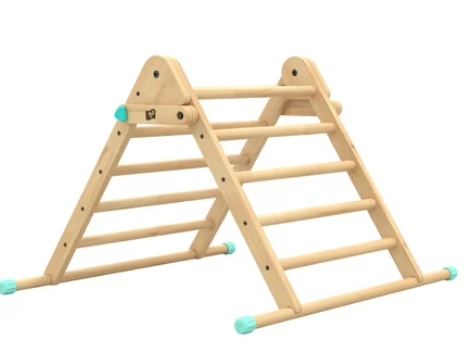
Balance bikes, climbing frames, and other active toys encourage gross motor skills by promoting balance, coordination, and strength. Active play through these toys not only supports physical health but also contributes to a child’s confidence in their bodily movements and abilities. This can be particularly beneficial as children grow, enabling them to navigate their physical environments with greater ease and confidence.
The Power of Play – Social and Emotional Development: Learning Through Interaction
Play is often the first opportunity for children to engage socially with their peers or family members. Toys that encourage role-playing, sharing, and interaction—like dolls, pretend kitchen sets, or simple board games—are invaluable for a child’s social and emotional development. By playing with these toys, children learn to communicate, share, and negotiate, helping them develop empathy and understanding.
Role-playing toys are especially beneficial for toddlers as they allow children to explore different roles and scenarios. Pretending to be a parent, doctor, or teacher not only stimulates imagination but also helps children understand different perspectives, improving their social-emotional skills. These activities provide a safe environment for children to experiment with emotions, recognise social cues, and develop problem-solving strategies, laying a foundation for healthier relationships in later life.
The Power of Play – Creativity and Imagination: Fostering a World of Possibilities
Toys can act as gateways to limitless creativity, allowing children to express themselves freely and explore new ideas. Open-ended toys, such as building blocks, art supplies, and dress-up clothes, are particularly effective at inspiring creativity because they have no set purpose and can be used in countless ways. Through these toys, toddlers can build their own worlds, invent characters, and develop stories, all of which encourage creative thinking and self-expression.
Creativity nurtured in the early years can have long-lasting benefits, extending to problem-solving skills, adaptability, and emotional resilience. When children are encouraged to think imaginatively, they develop a sense of independence and confidence in their ideas, fostering a mindset that will benefit them throughout their lives.
The Power of Play – Choosing the Right Toys for Toddlers
Given the wide array of toys available, choosing the right toys for toddlers can be challenging. However, selecting toys that align with a child’s developmental needs and interests can make all the difference in supporting their growth.
- Age-Appropriate Selection: Safety and developmental appropriateness should always come first. For toddlers, toys should be easy to handle, safe, and aligned with their cognitive and physical abilities. Simple, durable toys like stacking cups, wooden blocks, and soft plush toys can offer valuable learning experiences without overwhelming them.
- Open-Ended Play: Toys that allow open-ended play are ideal for promoting creativity and exploration. Look for toys without fixed rules or objectives, such as building sets, art supplies, or pretend play costumes. These toys encourage children to think outside the box and adapt their play as they grow.
- Balance of Educational and Fun: While it’s essential to consider educational value, toys should also be enjoyable. When play feels like a chore, children are less likely to engage deeply. Educational toys that incorporate fun elements, like musical instruments or games with bright colours and sounds, can capture a child’s interest while enhancing their learning.
- Social and Cooperative Toys: As children develop, toys that encourage group play, such as board games or cooperative building sets, can help them develop social skills and learn to work with others. These toys also provide valuable opportunities for parents to participate, creating bonding moments and reinforcing the importance of family interaction.
The Power of Play – How Parents Can Support Play-Based Learning
While the right toys can facilitate development, parental involvement is equally crucial in making playtime meaningful. Observing and engaging in play with children offers parents insights into their child’s interests, strengths, and areas where they may need extra support. This interaction also provides an opportunity for parents to model positive behaviours, introduce new ideas, and guide children in exploring new ways to use their toys.
Encouraging free play is essential, as structured activities can sometimes limit a child’s ability to experiment and think independently. Parents can foster a balance by setting up play environments that encourage exploration while also being available to join in, respond, and offer encouragement as needed.

The Power of Play – Conclusion: The Lasting Impact of Early Years Toys
The power of play in a child’s early years cannot be overstated. Through toys for toddlers, children explore, learn, and grow, laying down the essential building blocks of their intellectual, physical, social, and emotional development. Each toy offers a different experience, whether it’s enhancing cognitive abilities through puzzles, developing motor skills with active play, fostering social skills through role-playing, or unleashing creativity through open-ended materials.
In today’s world, where digital distractions are ever-present, the value of traditional toys and playtime becomes even more significant. By choosing the right toys and fostering a supportive play environment, parents can empower their children to embrace learning, face challenges, and develop a love for exploration that will last a lifetime. So, the next time you select a toy for a toddler, remember: you’re not just giving them something to play with—you’re offering them the tools to build their future.

Welcome to Under 5s—a dedicated resource for families navigating the beautiful, busy whirlwind of the early years. We concentrate on real, everyday advice that families in Yorkshire and beyond can easily follow.